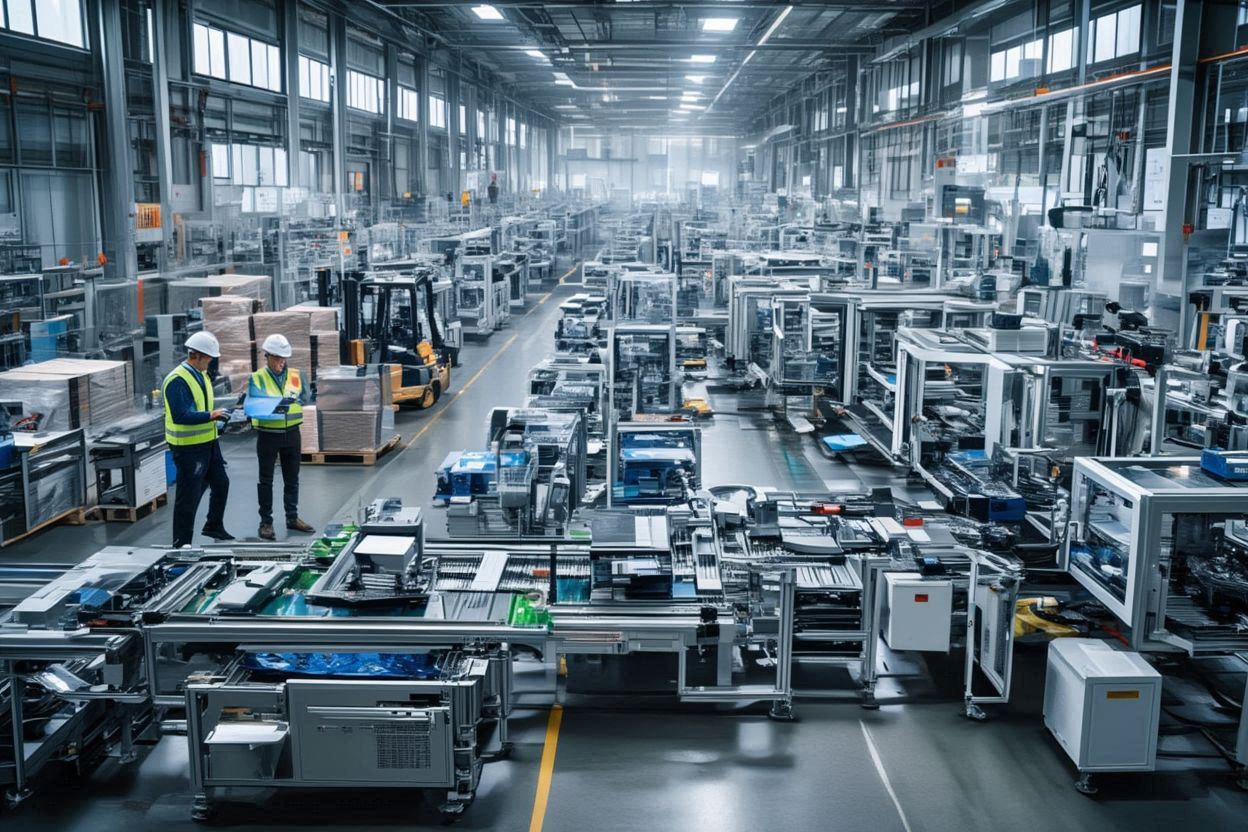
Building Next-Generation Industrial Capacity
Developing new industrial facilities or expanding existing plants requires more than just construction—it demands an integrated approach that combines automation, digital tools, and sustainable practices. Modern factories must operate efficiently, adapt to future needs, and deliver measurable business value from day one.
Planning and Conceptualization
Before construction begins, a strong foundation is essential:
- Assess operational goals – Define production targets, sustainability objectives, and workforce requirements.
- Select optimal location and layout – Consider workflow efficiency, energy use, and expansion potential.
- Integrate digital planning tools – Use simulations and virtual models to optimize equipment placement and production processes.
Effective planning ensures that the facility supports both current operations and future growth.
Integrating Automation and Digital Transformation
A key factor in modern capacity projects is the integration of advanced automation and real-time data systems:
- Unified control systems – Combine process, power, and motor control on a single platform for streamlined operations.
- Real-time production insights – Enable quick decisions by monitoring production and energy usage through a single interface.
- Simulation and testing – Validate designs with digital twins to reduce risk and optimize performance before commissioning.
These technologies accelerate time-to-market, improve uptime, and enhance return on investment.
Workforce and Operational Excellence
Human factors remain critical even in highly automated facilities:
- Task automation and workforce enablement – Identify repetitive tasks suitable for automation while supporting employees with intuitive tools.
- Training and knowledge transfer – Ensure operators can efficiently manage, maintain, and optimize the facility.
- Safety and ergonomics – Design processes to reduce risk and improve operational comfort for employees.
Balancing human expertise with automation ensures maximum efficiency and reliability.
Sustainability and Long-Term Performance
Modern industrial projects prioritize environmental responsibility and long-term operational efficiency:
- Energy and water efficiency – Design systems to minimize resource consumption.
- Waste reduction – Optimize production processes to reduce scrap and emissions.
- Scalable infrastructure – Build facilities that can adapt to future market demands without major redesign.
Sustainable practices ensure that facilities remain competitive and responsible for decades.
Conclusion
Next-generation industrial capacity is achieved through a holistic approach that combines planning, automation, workforce enablement, and sustainability. Facilities designed with these principles are efficient, adaptable, and capable of supporting long-term business growth.
See how our solutions can optimize your workflows, enhance productivity, and achieve measurable results.