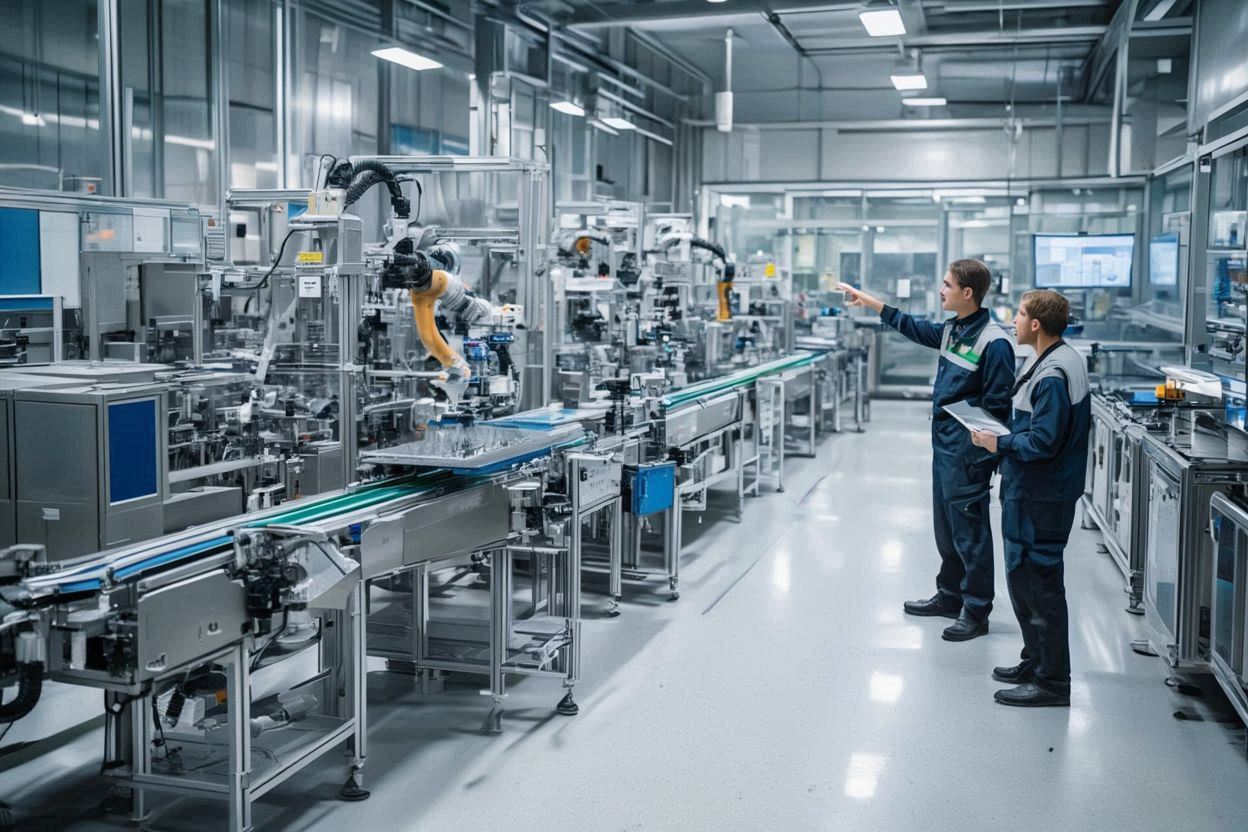
Industrial Process Automation Solutions
Industrial process automation helps maximize productivity, improve efficiency, and reduce operational risks. By leveraging technology such as sensors, controllers, and software, manufacturers can optimize production while maintaining safety and quality standards.
What Are Industrial Process Automation Solutions?
Industrial process automation solutions integrate technology across manufacturing processes to streamline operations, enhance control, and reduce human error. These solutions cover a wide range of applications, including:
- Batch process control
- Process optimization
- Safety system management
- Plant-wide automation
- Benefits of Industrial Process Automation
Implementing industrial process automation offers significant advantages:
- Increased efficiency – Reduces process time and improves throughput.
- Enhanced product quality – Ensures consistency and reduces defects.
- Lower operational costs – Optimizes resource usage and minimizes downtime.
- Improved safety – Reduces human exposure to hazardous environments.
- Real-time monitoring – Provides actionable insights for proactive decision-making.
Key Technologies
Industrial process automation relies on advanced tools and systems:
- Distributed Control Systems (DCS) – Enable plant-wide integration of control, safety, and optimization.
- Programmable Logic Controllers (PLCs) – Manage specific automation tasks with precision.
- Supervisory Control and Data Acquisition (SCADA) – Monitor and control industrial processes remotely.
- Model Predictive Control (MPC) – Uses data-driven algorithms to optimize production and profitability.
- Industrial robots and automated equipment – Reduce manual intervention and improve reliability.
Process Safety and Risk Mitigation
Process safety is a critical component of automation strategies:
- Safety instrumented systems protect personnel, equipment, and the environment.
- Standalone or integrated safety systems can be selected based on Safety Integrity Level (SIL) requirements.
- Automation reduces the likelihood of human error and operational hazards.
Batch Control and Optimization
Automated batch control systems provide:
- Flexibility to manage diverse recipes and workflows
- Reliable execution with reduced human intervention
- Integration with production optimization tools to improve efficiency and profitability
How Industrial Process Automation Works
Automation systems collect data from sensors, analyze it through controllers, and execute commands via actuators:
- Sensors measure variables like temperature, pressure, and flow.
- Controllers process data according to defined algorithms or AI/ML models.
- Actuators adjust equipment operation to maintain optimal process conditions.
This cycle ensures continuous, efficient operation with minimal manual intervention.
Applications Across Industries
Industrial process automation is widely used in:
- Chemical and petrochemical production
- Food and beverage processing
- Pharmaceutical manufacturing
- Oil, gas, and energy sectors
- Any industry where precision, safety, and efficiency are critical
Conclusion
Industrial process automation solutions enable manufacturers to optimize operations, improve safety, reduce costs, and increase overall productivity. Leveraging advanced control systems and predictive technologies ensures high availability and scalable, efficient production.
See how our solutions can optimize your workflows, enhance productivity, and achieve measurable results.